
Message of the Week

Do Not Be Afraid

The Nineteenth Sunday in Ordinary Time

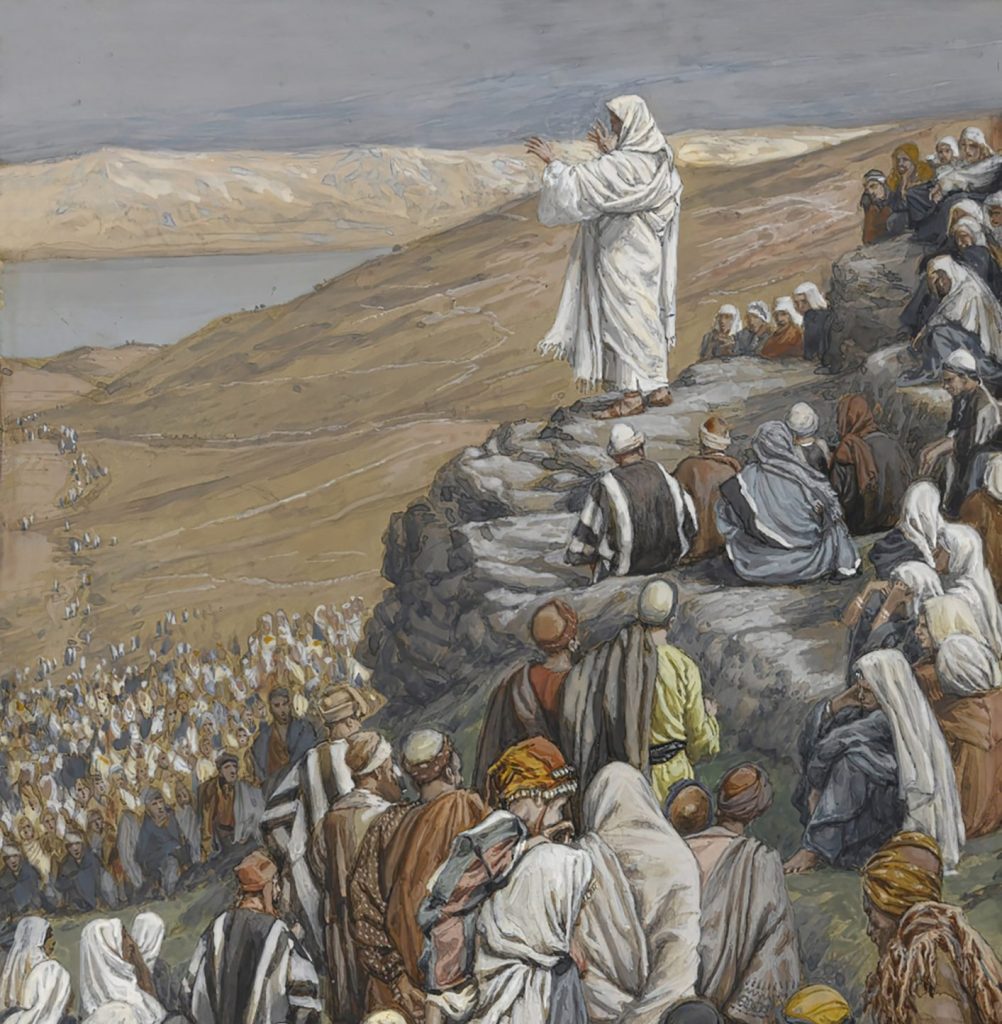
Peter had a direct command from Jesus to walk on the water. Yet, Peter doubted.  How many times do we also doubt as we go about our God-given mission in life?  Jesus also strengthens us.  “Take courage it is I; do not be afraid”

Fear always clouds our vision.  It often feels laborious, filled with hardships, and some trials may seem never-ending.  Jesus allowed this fear precisely so we can confront it directly: “Take courage, it is I; do not be afraid.”  In His divine wisdom, Jesus knew that countless disciples would read this story and ponder this moment until the end of time.

The courage that comes from recognizing God in our midst allows us to conquer fear—especially in our moments of suffering, when the path ahead seems hard, dangerous, and without end.  Even when our faith wavers, we must not give in to despair.

Nothing is impossible with God. Our trust in Him is our strength.  Jesus calls us to act in faith.  How is your walk on the water?

Nineteenth Sunday in Ordinary Time | USCCB

God’s Providential Care

The Eighteenth Sunday in Ordinary Time

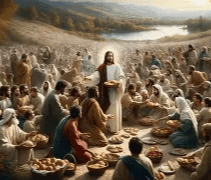
The multiplication of the loaves and fish foreshadows the Eucharist, likely the reason it is recorded in all four Gospels.  In the Eucharist, God provides abundantly for our spiritual nourishment.  When received with faith and trust in God’s providence, Jesus’ Body and Blood nourish every virtue within us, empowering us to flourish spiritually.  The Eucharist prepares us for eternal life, where we anticipate sharing in the eternal Wedding Banquet of Heaven—a perfect, everlasting celebration free from all sin, sickness, and suffering.

Reflect today on Jesus’ tender care. He looks upon your needs with the same compassion He showed to the crowds in the wilderness. Consider especially how He desires to feed you daily through the Most Holy Eucharist, the true Bread from Heaven.  Bring to Him whatever you have, even if it seems small or insufficient—your struggles, weariness, prayers, and hopes—and trust that in His hands, they will be multiplied for the good of your soul and the souls of others.  Let this miraculous feeding stir within you a deeper faith in God’s providence and a more fervent desire for the Eucharist, where Christ Himself is our sustenance, our healing, and our foretaste of eternal joy.

Eighteenth Sunday In Ordinary Time | USCCB

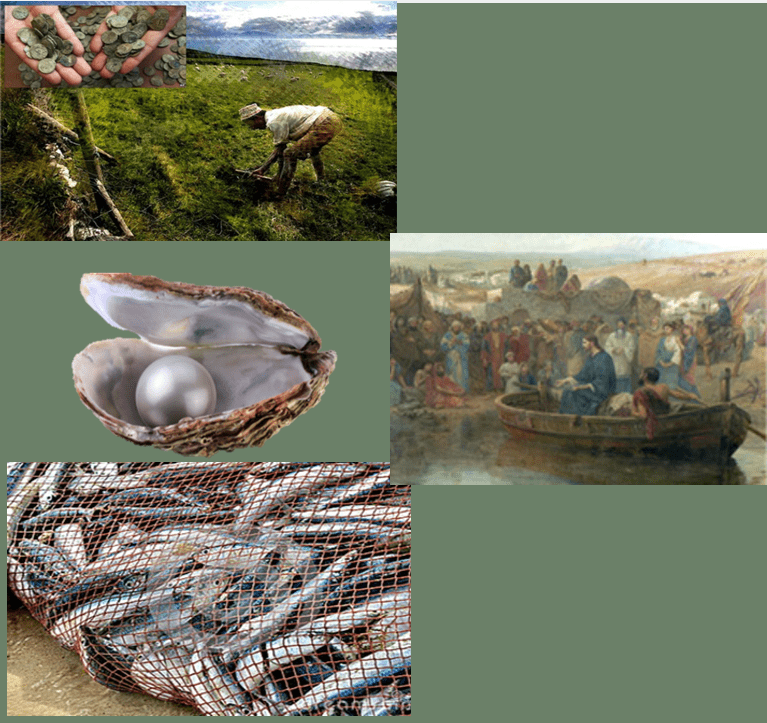
The Kingdom of Heaven is like….

The Seventeenth Sunday in Ordinary Time

The ending of today’s Gospel speaks about “the new and the old.”  Jesus is saying that a person “instructed in the kingdom” has wisdom both old and new; in other words, that person learns from the past as well as from the present.   Let’s look at each of those.
We learn from the past by studying it.  So the wisdom of the Kingdom comes first from the scriptures.  The more familiar we are with the word of God, the more wisdom we possess.  Along with studying the scriptures, we must pray over them and ask the Spirit to show us how they apply to our lives.  We can also learn from the lives of the saints and writings of the Church.  The saints may have lived extraordinary lives, but they all began as ordinary people who gave their lives to Christ.  The writings of the Church, though sometimes very technical, contain the wisdom of centuries of living the faith.  If you only have time to go to Mass on Sunday, just listening to the homily can help to apply the scriptures to your life.

One way we can learn from “the new” is to learn from our mistakes.  That includes learning from our sins.  When we are truly sorry, we make an effort to change our ways.  You might say we have to learn a new way to respond to that situation.  In the Bible, the word repentance itself means a change of heart, a new way of seeing and doing things.

We can also learn from the mistakes and the successes of our friends.  As we share our faith with them, we share the stories of our lives, both good and bad.  These stories can teach us how to live our faith (or how not to!).  One of the advantages of having friends whom we trust enough to confess our faults to is that we do not have to figure out life on our own.  God can speak to us through a friend or relative whose advice we seek.  A truly wise person has received a lifetime of good advice.

Tom Schmidt, Diocesan Publications
Seventeenth Sunday in Ordinary Time | USCCB

I will open my mouth in parables, I will announce what has lain hidden from the foundation of the world.

The Sixteenth Sunday in Ordinary Time
Jesus teaches that God’s Kingdom is growing in the world, even though good and evil exist side by side.  In the parable of the wheat and weeds, a farmer allows both to grow together until the harvest, showing God’s patience and mercy as he gives people time to repent and change.  Through the mustard seed and yeast, Jesus explains that the Kingdom often begins in small, hidden ways but grows into something great.
God is patient, merciful, and at work even when we cannot see it. We are called to trust in God’s timing and allow his Kingdom to grow in our lives.

Sixteenth Sunday in Ordinary Time | USCCB

Some seed fell on good soil and produced fruit.

The Fifteenth Sunday in Ordinary Time

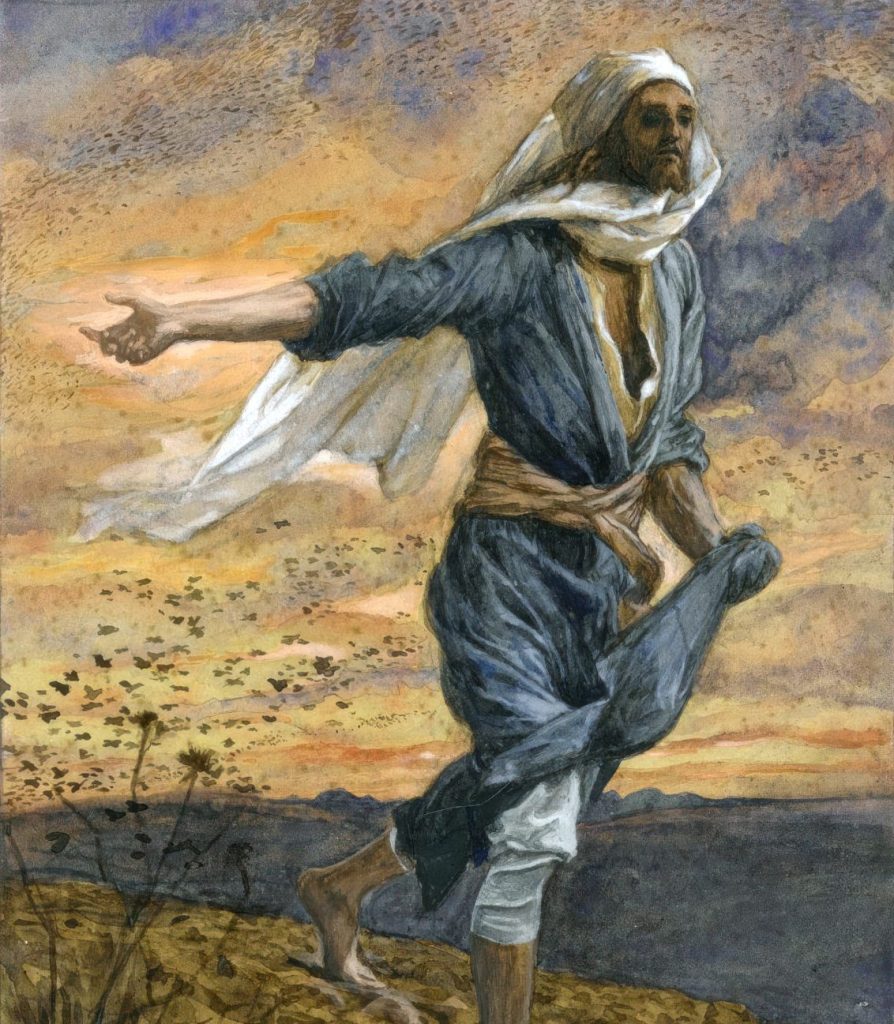
Jesus threw out parables like a farmer sowing seeds.  Some of them fell on the ears of those who would be disciples.  But most fell on the ears of people not ready to understand.  The path, the rocky ground, and the thorns are all metaphors for how his teachings were received.  So how do we receive his word?

Do we hear it without understanding, letting it go in one ear and out the other?  Do we hear it joyfully, but then forget it when troubles or difficulties come along?  Do we listen to the word but ignore it in the face of later temptation?

If we want the word to grow strong in us, we can take steps to help ourselves understand it.  We can come to church early and spend a few minutes with the readings before Mass.  After Mass, we can talk about the readings or the homily with our family over breakfast.  We can pick out one practical point to practice that week.

God’s word can be likened to a ball game.  We can sit back and watch, not really involved or caring who wins.  Or we can jump in and participate and make the game ours.  Let us ask God how we can take the word and run with it.

Tom Schmidt, Diocesan Publications

Fifteenth Sunday in Ordinary Time | USCCB

Come to me, all you who labor and are burdened, and I will give you rest.

The Fourteenth Sunday in Ordinary Time

Jesus tells us in today’s Gospel that he is “meek and humble of heart.”  Yet just a few lines before this, he says that he is equal to his Father, the almighty God. So how can the Son of God be both meek and mighty?

Jesus’ meekness meant doing the will of God completely.  The challenge for us comes in his words, “learn from me.” We must learn to do God’s will as completely as Jesus did.

First, to be complete means we do all that God wants from us.  We cannot pick and choose what we want to do and what we want to ignore.  For example, we may reserve the right to decide which teachings of the Church we will follow.  But doing God’s will completely means doing it without reservation.

Second, we may try to do all that God asks, but give up if something becomes too difficult.  We may say we forgive someone, for example, but when they reject that forgiveness, we become even angrier.  We can learn from Jesus how to do each part of God’s will to completion, as Jesus did all the way to the cross.

Tom Schmidt, Diocesan Publications
Fourteenth Sunday in Ordinary Time | USCCB

He Will Surely Not Lose His Reward

Thirteenth Sunday in Ordinary Time

In order to follow him, Jesus asks his disciples for total dedication.  As an example, he tells us that to be worthy, we must love him more than we love our parents or children.  He doesn’t expect us to abandon them, only to have so much love for Jesus that it spills over into our family, allowing us to love them more deeply.  But we can be so dedicated to Jesus that he comes first.  That means that if we lose a family member through death or divorce, we still maintain our faith in the Lord.  If we see someone in our family straying from the faith, we try to help them return through our prayers, example, and encouragement.  If our spouse tries to lead us toward sin, we have the courage to defend the faith.

Then Jesus gives the example of three kinds of disciples.  First come the prophets.  They are people who have lived the faith and can teach others the wisdom they have learned.  They can be good counselors who advise us, teachers who inspire us, or leaders who encourage us to follow Jesus.  While we may not have these qualities, Jesus promises to reward all who follow their advice, learn from their teachings, or follow Jesus because of them.

Second come the righteous, those who teach us by their example of a quiet life.  Many good parents practice this kind of discipleship.  Children may not listen to their parents’ advice, but they still grow up with memories of how they lived.  If we imitate the best of our parents’ ways, we will receive the reward of the righteous.

Finally, come the “little ones.”  These people, like children, follow Jesus with great joy and love.  They may not be leaders or always do things right.  They may be elderly or disabled.  In their weakness, they show us the power of the Lord.  When we respect and value them, we can see Jesus in them.  And every time we can experience Jesus through another person, it is a wonderful reward for a disciple.

By Tom Schmidt, Diocesan Publications 
Thirteenth Sunday in Ordinary Time | USCCB

Fear No One, Do Not Be Afraid

Twelfth Sunday in Ordinary Time

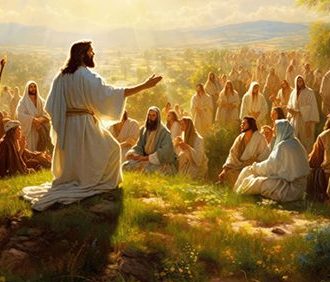
“Do not be afraid of men,” says Jesus.  He is speaking about fearing those who persecute them because of their faith.  In the verses preceding this Gospel passage, he tries to prepare us for persecution and says that just as they did to him (Jesus), they would do it to his followers.  But he triumphed over his persecutors.  They could not stop him.  And that is what he promises us as well.  We cannot be destroyed as long as we maintain that faith.

The best way to maintain our faith is by giving it to others.  It may sound like a contradiction, but it means that when we share our faith, our own faith grows.  And when we allow others to share their faith with us, we feel encouraged and supported.

Sometimes we may hesitate to speak about our faith.  The only thing we should fear is our own weakness, not the power of Satan.  That is why Jesus said that whoever denies him before men will also deny him.  However, Jesus died for our sins, so not even they can destroy us if we turn back to the Lord.  So give thanks for his forgiveness, but do not forget to spread the news that you have been forgiven.  You might encourage another person to find the courage to return to the Lord, and thus achieve another victory of faith that overcomes fear.

By Tom Schmidt, Diocesan Publications
Twelfth Sunday in Ordinary Time | USCCB

Jesus Sent out the Twelve

Eleventh Sunday in Ordinary Time

Jesus’ Heart, ever overflowing with love, is moved with pity for the people before Him.  He sees their struggles, their anguish, their abandonment, their desires.  He sees that they are “like sheep without a shepherd,” and it is clear that there must be more “laborers for the harvest.”

Jesus is fulfilling the ancient promises to erect a new Israel, a new Chosen People based not on race but on their acceptance of Him and His teaching.  He calls twelve disciples, signifying a link between the Old Covenant and the New Covenant, between the twelve tribes of Israel and the new Kingdom He has come to establish.  He sends these disciples out first to the “lost sheep of Israel.”  The Gentiles would have to wait until after the Resurrection to hear the Gospel, but with this first mission of the disciples, the Lord is beginning to spread his Kingdom to the whole world.

Jesus gives them authority, bestows on them His own authority over evil in the world.  And His instructions to them mirror exactly what He has been doing in recent miracles: He has been proclaiming that the Kingdom of Heaven is at hand, curing the sick, raising the dead, cleansing the lepers, and driving out demons.  These first collaborators have watched the Master in action and now He sends them to do as He has done, trusting that God will take care of all their needs.  The work of the Church continues in the same way until the end of time, allowing Christ to continue the work of salvation.  In the teaching, leading, and sanctifying ministry of the Church, Jesus continues the work He began with the twelve apostles.  Jesus later instructed them to “go and make disciples,” and it is the role of the Church to continue this very work and help those disciples to grow in holiness so that they can also go and make more disciples!

This is our mandate as well.  The Catechism tells us that the “service of and witness to the faith are necessary for salvation” (CCC #1816).  We are baptized into the Person and the Mission of Christ, and we are sent to bring the Gospel to others.  And as we do so, we experience its power even more. We don’t need to be perfect before we start – Jesus sent His disciples out before they could wholly understand the fullness of the Kingdom, and we are also called to trust the Lord and labor for the Kingdom, just as we are.  If we acknowledge our own limitedness and trust in God, He will do the work. We need nothing but to go in His Name, for His glory and a true desire for the good of others.  He will do the rest.

 Kathryn Mulderink, Diocesan Publications

Eleventh Sunday in Ordinary Time | USCCB

The Most Holy Body and Blood of Christ

Ordinary Time

In John’s Gospel, Jesus gives a long discourse on the Bread of Life.  In today’s Gospel, he says that the bread he will give is his flesh.  The leaders of the Jews don’t understand.  Hopefully, we can do better.

In the pagan world at the time of Christ and before, a sacrifice was also a meal.   Jesus used that understanding of sacrifice to explain his gift of self.  He would die on the cross as a sacrifice to the Father, and we would share in the meal by consuming bread and wine, which are his Body and Blood.

Better than the pagan sacrifice, the Eucharist unites us with God because Jesus is both human and divine.  His humanity allowed him to represent us to the Father, as a lawyer represents a client to the court.   Jesus’ divinity allowed his sacrifice to be worthy of the Father, as no merely human gift could be.

The Eucharist also unites us to one another.  Because the food we share is the Body and Blood of Christ, we in a sense become what we eat.  We show this by our love, by sharing our faith, by forgiving each other, and by our service to each other.  If we believe that Jesus is divine, we must believe his word that the Eucharist is truly his Body and Blood, given for us.

Tom Schmidt, Diocesan Publications
The Solemnity of the Most Holy Body and Blood of Christ | USCCB

I Have Not Come to Abolish the Law but to Fulfill Them

The Sixth Sunday in Ordinary Time

In the James Bond movies, 007 has a license to kill. He can shoot all the bad guys he wants without worrying about being charged with murder.  God, however, does not issue a license to sin.  The first reading from Sirach reminds us that any time we choose between life and death, good and evil, it is our free choice and our responsibility.  God may allow us to make bad choices, but God never commands anyone to sin.

Jesus goes even deeper than Sirach.  The people of Sirach’s time had followed the laws and commandments that governed external actions.  But Jesus taught that thoughts and desires that lead to sin can also be freely chosen or rejected. In the Gospel he gives us some examples.

The first is about killing.  Jesus says that anyone who gets angry enough to kill or who looks down on his neighbor as not deserving to live has committed murder in his heart.  Because the Eucharist is our sacrament of unity, we should take care to be reconciled with others before coming to the altar.

The next warnings are about adultery and divorce, breaches that also begin with interior feelings.  Jesus exaggerates when he tells us to cut off a hand or tear out an eye, because he knew how easily we rationalize our feelings and pretend they are harmless.  Jesus takes marriage seriously and expects his disciples to do the same.

His final example concerns taking oaths.  Jesus gets to the point and says that we wouldn’t need oaths if we always told the truth and kept our promises.  Our faith is based on the knowledge that God keeps promises.  Shouldn’t we do the same?

Tom Schmidt, Diocecean Publications

Sixth Sunday in Ordinary Time | USCCB

You Are the Light of the World

Fifth Sunday in Ordinary Time

Jesus uses two different examples of a good disciple: salt of the earth and light of the world.  While these images seem to have little in common, there are similarities, the most obvious being that a little of either goes a long way.  So also, a little faith can make a big difference. The faith of little children can bring their parents back to the Church.  The way we live our faith can speak even louder.

Isaiah gives us some hints in the first reading when he writes about feeding the hungry, giving shelter to the homeless and clothes to the poor.   But we sometimes get things backwards.  If we do the things Isaiah tells the people to do, we might think that the deeds will give us faith.  If we truly believe that God lives in the people around us, especially the poor, then we will want to show our love by caring for each other.

But if we don’t have faith, then we are like the salt that has lost its flavor.  A low-salt diet may be good for us, but a low-salt faith, instead of making things better, would make them worse.  Without faith in God’s love for us, we would not respond with love of our own.  We could still be a good person, but we would not be a very good disciple.

Tom Schmidt, Diocesean Publications

Fifth Sunday in Ordinary Time | USCCB

Come after Me, and I will Make you Fishers of Men.

Third Sunday in Ordinary Time

In Matthew’s Gospel, Jesus’ first public words are, “Repent, for the kingdom of heaven is at hand.”  These were likewise the words of St. John the Baptist (Matt. 3:2), and now that John has been arrested for speaking inconvenient and uncomfortable truths to the powers-that-be, Jesus takes up the same message with a new authority and urgency.

While we often think of the word “repent” as a Lenten message – a sorrowful self-condemnation for our sins – the Greek word “metanoeite” refers to a deep interior conversion, a reorientation, a change in heart and mind and direction.  If we are turning away from something, we must be turning toward something else.  Yes, repenting means to turn away from sin, but more importantly, a turning toward God.  The Catechism tells us that it is “a radical reorientation of our whole life, a return, a conversion to God with all our heart.” (CCC 1431)

In order to turn fully toward God, we must turn away from all that keeps us from seeing Him clearly and drawing near to Him as our loving Father.  So while part of repentance is looking at our sin, confessing to a priest, and intending not to sin again, the better part is looking at the Lord, seeing His Truth and Beauty and Goodness, and opening ourselves to love Him more than ourselves, our sin, and our comfort.

Why?  Because the Kingdom of Heaven is near; the King has arrived and the reign of God begins now.  This Kingdom is not a political or earthly administration of borders and laws, but the reign of the King of Love, present to us in our hearts, in the Word, and in the Sacraments.  St. Augustine teaches that the Church is the seed and beginning of this Kingdom on earth; we are made citizens of this Kingdom and true members of the family of the King through Baptism, and we grow to maturity through the Sacraments, prayer and service.

John prepared the way, but Jesus is the way, which He will later make clear.  This call to “repent” is a call to hope: hope in the loving Heart of the Savior who came to bring reconciliation and peace, hope in the call and value of each and every life, hope in the truth that no one can out-sin God’s mercy and love, hope in the certain victory of the Kingdom of Love.

Kathryn Mulderink, MA, for Diocesan Publications

Third Sunday in Ordinary Time | USCCB

Lord, Strengthen our Spirits as We Await Your Promises

Twenty-third Sunday in Ordinary Time

When Jesus rose from the dead, he showed his disciples that even death will be overcome by God.  In today’s Gospel, he expands that to include most of the bad things that can happen to both non-believers and disciples alike.

Starting with the destruction of the temple in Jerusalem, Jesus mentions most of the scary things that people thought would bring the end of the world.  He gives two pieces of advice.  First, don’t be fooled by anyone who says this is the end or who claims to be Jesus. When Jesus comes again, there will be no doubt about who it is.  Then, don’t be terrified by natural disasters or wars.

As disciples, we hope we would respond to disasters not with fear, but with love.  Believers can voluntarily help those affected, comfort the survivors, or help rebuild their homes or schools.  People have welcomed strangers into their homes after a flood or hurricane has destroyed a neighborhood.

There is a saying that “no good deed goes unpunished.”  Jesus never says that his disciples would be given awards for their acts of charity.  In the second half of the Gospel, he says that his disciples would be persecuted, hated, and even betrayed by their own families.  Jesus has advice for that situation, too.  He tells us “not to prepare your defense,” but to let him give us the words.  I suspect that he means not to worry about what you might say, lest you become scared speechless.  If you let him, Jesus will “prepare” you with the scripture readings, your pastor’s homilies, and your own prayer life.  All of these can help open us to the gifts of the Spirit, who helps us proclaim our faith without fear.

Tom Schmidt, Diocesan Publications
Thirty-third Sunday in Ordinary Time | USCCB

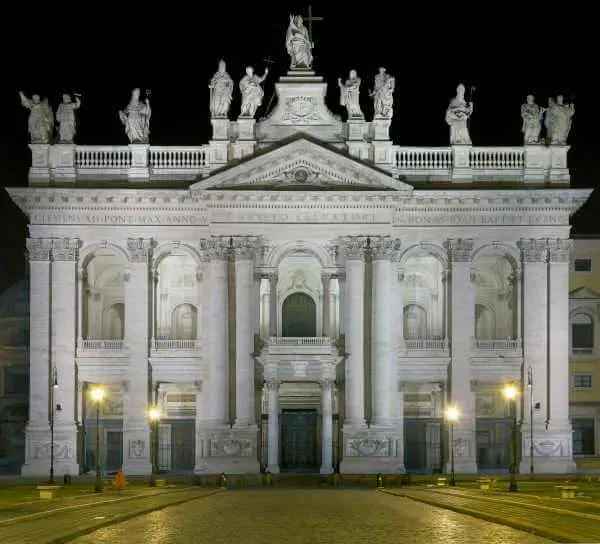
Feast of the Dedication of the Lateran Basilica

Ordinary Time

This basilica is the seat of the Bishop of Rome, the pope, and that, as we celebrate its dedication, we are reminded of the people the building represents: the pope and all God’s people throughout the world.

: When we celebrate the dedication of this great church, we are reminded of our own parish church where we gather to celebrate and, even more so, of our domestic church, our home, where we encounter God every day.


https://bible.usccb.org/daily-bible-reading

“… that everyone who sees the Son and believes in him may have eternal life..”

Commemoration of All the Faithful Departed, Year C Ordinary Time

One of the most beautiful aspects of our Catholic faith is the Communion of Saints.  Whether it be the Church Militant still fighting the good fight here on earth, or the Church Suffering enduring their final time of purification in Purgatory, or the Church Triumphant rejoicing with our Lord in heaven, we are all in it together.  We are one Church, united in the mysteries of the passion, death and resurrection of our Lord.

What makes this reality so beautiful is our ability to pray for one another, no matter what state of life we find ourselves in.  It is an incredible circle of love and care that won’t end until Christ comes again.

Today, we celebrate the Church Suffering.  It is a day to remember “those who have gone before us marked with the sign of faith.”  Since our souls must be completely cleansed before entering the heavenly banquet, many of us will be required to endure this time of purification.  Others will be permitted to undergo great hardships here on earth and be cleansed through them, with the aid of the sacraments.

Sometimes we may wonder why our loved ones are permitted to suffer but all of our earthly trials, when lived with faith, can be opportunities for purification for ourselves and others.  “Offer it up” is no longer a cliche, but rather a reminder to direct our minds and hearts to God during times of difficulty.

Today, let us pray for all the souls in purgatory, that they may soon gaze upon the glorious face of our Savior, and may they in turn pray for us, that we may one day join them in Heaven.

Tami Urcia, Diocesan Publications

The Commemoration of All the Faithful Departed | USCCB

O God, be Merciful to Me a Sinner

Thirtieth Sunday in Ordinary Time

The Gospel makes it pretty clear that exalting yourself is not the way into the Kingdom.  It might sound strange to hear Paul saying he expects the winner’s crown.  So why is he any different from the Pharisee in the Gospel?

The Pharisee fasted and tithed, was not greedy or adulterous, but he misses the point.  He thinks that being right with God comes from a person’s accomplishments.  He feels no need to ask for God’s mercy. Yet if he relied on that mercy, he wouldn’t boast about his good deeds.  Instead, he would ask for God’s mercy and then thank God by doing good or being generous.  In other words, he thinks that God is waiting to be bribed with good deeds so that he can be justified.  “After all,” thinks the Pharisee, “what else are good deeds for if not to make me look good?”

St. Paul, on the other hand, looks at his life as a Pharisee and is amazed that God forgave his “good works” of keeping the law and persecuting Christians.  His boasting is not about what he has done for God; it’s more about what God has done through him.

Maybe you have examples of what God has done in your life: the people God sent to love you, the talents or abilities God gave you, the times God forgave your sins.  Are you so grateful for what God has done that you want to do more for God?  Or do you go to church, put your offering in the collection, and work a booth at the parish picnic so that God will be grateful to you?   Remember that God loved St. Paul while he was still persecuting Christians, loved him enough not only to forgive him but to make him into a great apostle.  Why waste your time trying to earn that love, when you could be doing whatever, you can to thank God for it?

Tom Schmidt, Diocesan Publications
Thirtieth Sunday in Ordinary Time | USCCB

When the Son of Man Comes, Will He Find Faith on Earth?

The Twenty-Fifth Sunday in Ordinary Time

In today’s Gospel, Jesus gives a clever example of why we are to persevere in praying, even if we think the prayer is not being heard. The crooked judge just wanted to get that widow off his back. So we can pray to God with even more confidence, because we know that God loves us and will answer our prayers.

St. Paul carries that theme of perseverance even further. He is not just talking about prayer here; he encourages Timothy to persevere in proclaiming God’s word as well. That command we may find more challenging than prayer. He tells Timothy (and us!) to “convince, reprimand and encourage through all patience and teaching” (2 Timothy 4:2). How can we do that?

“Convince” reminds me that our faith should be reasonable. Jesus’ command to love one another, for instance, can be taught much more convincingly by giving examples of love. A mother who hugs her child when he is hurt and encourages him when he feels lost is teaching that command in a way that will be remembered much longer than just telling him to love people.

Paul also talks about reprimanding each other. Most people find it difficult to reprimand someone they are in charge of, much less one who is equal in status. That’s where patience comes in. A reprimand can be made patiently and gently, as a sign of concern rather than authority.

Paul lastly mentions teaching. Parents can do their part by teaching the stories from the Bible, helping children to see God in creation, teaching them to pray, and being good examples of God’s love for them. If you send your children to religion classes or the parish school, do what you can to support the teachers so that what the children learn at school is practiced at home.

Tom Schmidt, Diocesan Publications
Twenty-ninth Sunday in Ordinary Time | USCCB

“Stand up and go; your faith has saved you.”

Twenty-Eighth Sunday in Ordinary Time

This story highlights the importance of our response to God when He does touch us. We must glorify God with a loud voice, fall on our knees before Him and express our deepest gratitude. When the one leper does this, Jesus says to him, “Stand up and go; your faith has saved you.” That mercy from our Lord was a mercy that touched his soul. It imparted the gift of faith and enabled this man to go forth and be healed with eternal graces.

Too often we turn to God in prayer only when we have a problem. Then, once the problem is taken care of, we pay little to no attention to our Lord. God’s role in our lives is not to fix our problems so that we can then go about our daily lives as normal. His mercy must evoke ongoing and profound gratitude. Gratitude to God is nothing other than an acknowledgement of the truth. We owe everything to God. Without Him, we are nothing. We are dead in our sins. Just one leper realized this and was blessed with the gift of faith that saved not only his body, but also his soul.

Reflect, today, upon the ways in which you turn to God in prayer. It is good to come to Him with your needs and problems. It is good to cry out “Jesus, Master! Have pity on me!”


Twenty-Eighth Sunday in Ordinary Time | USCCB

Respect Life, All Life

Respect Life Sunday - 27th Sunday in Ordinary Time

Respect Life Month Begins

Heavenly Father, the beauty and dignity of human life was the crowning of your creation.  You further ennobled that life when your Son became one with us in his incarnation.

Help us to realize the sacredness of human life and to respect it from the moment of conception until the last moment at death.

Give us courage to speak with truth and love and with conviction in defense of life.

Help us to extend the gentle hand of mercy and forgiveness to those who do not reverence your gift of life.

To all, grant pardon for the times we have failed to be grateful for your precious gift of life or to respect it in others. We ask this in Jesus’ Name.  Amen.

The Gospel of Life

Heavenly Father, the beauty and dignity of human life was the crowning of your creation.  You further ennobled that life when your Son became one with us in his incarnation.  Help us to realize the sacredness of human life and to respect it from the moment of conception until the last moment at death.

Give us courage to speak with truth and love and with conviction in defense of life.  Help us to extend the gentle hand of mercy and forgiveness to those who do not reverence your gift of life.  To all, grant pardon for the times we have failed to be grateful for your precious gift of life or to respect it in others.  We ask this in Jesus’ Name.  Amen.

St. John Paul II,  Evangelim Vitae,  paragraph 6

Evangelium Vitae (25 March 1995)

Share the Kindness You Wish to Recieve

The Twenty-Sixth Sunday in Ordinary Time

Today’s reading from First Timothy sounds almost like a coach getting his team ready for the big game.  This coach has much higher goals than a home run or a touchdown.  Instead of pursuing a league championship, he seeks faith, love, patience, and gentleness.  How about us?  Are we in the game or on the sidelines?  Let’s look at what Coach Paul is talking about.

Faith is a relationship with the Lord in which we imitate Jesus’ outlook on life, His teachings, and His love of God.  We struggle with his commands to love our enemies, to turn the other cheek, to forgive all wrongs, and to take up our cross each day.  As Paul would say, we are “competing well for the faith.”

We pursue love by listening to the Gospel, in which Jesus tells the parable of the rich man who was only concerned with his own comfort.  Jesus says that if we truly understood the prophets, such as the one in our first reading from Amos, we would not spend all our energy and wealth on ourselves.

As we learn to let go of our need to have everything go our way, we become more patient with people who disagree with us, or with frustrations and problems.  We learn to see God in our setbacks as well as in our successes.  Experiencing the Lord is the championship we want.

Tom Schmidt, Diocesan Publications
Twenty-sixth Sunday in Ordinary Time | USCCB

You Cannot Serve Both God and Mammon

The Twenty-Fifth Sunday in Ordinary Time

The parable in today’s Gospel has a crooked steward who is commended by his master for being prudent, or clever, trying to protect himself.  Jesus wanted us to be just as clever in serving the Lord.  Let’s look at the first two readings and how they challenge us to do more.

The reading from Amos talks about those “who trample upon the needy and destroy the poor” (Amos 8:4).  The challenge here is to ask yourself, “What do I do for the poor?”  Most parishes have organizations to help the needy and are happy to get volunteers.  Do you ever think of praying for the poor?

Speaking of prayer, our second reading also challenges us to do more.  Paul recommends prayers for “kings and for all in authority” (1 Timothy 2:2).  It’s easy to pray for friends and family; how much time do we give to praying for government leaders and executives?  Paul reminds us that God wants everyone to be saved (1 Timothy 2:4), sinners as well as saints, terrorists and embezzlers, atheists and agnostics.  I’ll bet you don’t spend much time praying for the “bad guys.”  Yet Jesus said, “Love your enemies.  Pray for those who hurt you”  (Matthew 5:44) I can’t say I’ve ever heard anyone say that was their favorite Bible passage.  But if Jesus expects more from those who love him, who are we to let him down?

Tom Schmidt, Diocesan Publications
Twenty-fifth Sunday in Ordinary Time | USCCB

Take Your Cross and Follow Me

Twenty-Third Sunday in Ordinary Time

St. Paul must have understood today’s Gospel very well.  Like Jesus, he knew what being a disciple would cost.  It landed him in prison. Also like Jesus, he is not afraid to ask others to take that discipleship seriously.  And he is not ashamed to ask a favor: Would Philemon accept his runaway slave, Onesimus, back into his home?  Not just as a slave, but as a member of his family.

In the Gospel, Jesus talks about the cost of discipleship.  Paul takes that a step further—he reminds us to accept that cost freely.  He could have ordered his friend to free the slave.  Instead of giving an order, he called Philemon to respond to his request freely.  Perhaps we can learn from that example.

Like Paul, when Jesus commands us to love one another, he leaves us free to accept that challenge.   Remember, he always says, “Love one another, as I have loved you” (John 13:34).  Jesus was never compelled to cure anyone or forgive their sins.  Yet how often do we go to church because we were told we have to?  Do we volunteer for the picnic only because the pastor twists our arm?

We can live life just doing what we have to.  Or when Jesus offers us a new motive—love for God because God loves us—we can choose to follow him freely.  Let us ask the Spirit to fill us with the freedom to love.

Tom Schmidt

Twenty-third Sunday in Ordinary Time | USCCB

The One Who Humbles Himself Will be Exaulted

Ordinary Time

While the first reading from Sirach and the Gospel focus on humility, with a surprise reversal of the humble being exalted, the reading from Hebrews surprises us in a different way. The author uses apocalyptic imagery to show how much the relationship between God and humanity has changed. He starts with images of fire, storms, and trumpet blasts—images that may remind you of an erupting volcano. Even God’s words brought fear and trembling.

It may not be surprising that God is beyond human comprehension, but Hebrews says no. God doesn’t want to be so far beyond us that we only approach in fear. Using more images from the end-time, the author gives us a picture of the baptized partying with angels and all the just who have died. And of course God is the host. Let’s look at some of those images to see how our relationship with the Lord has grown.

The heavenly Jerusalem reminds us that the Church is our home—not just your parish church building but the whole community of faith. How “at home” are you with your fellow parishioners? A church community can be a place to support those who are sick or jobless or depressed. It is also a place to be supported, to see God’s love in action. The angels in Hebrews may be a symbol of that support.

The “firstborn” and “spirits of the just” could remind us of those who went before us and now rest in the Lord. They had their own struggles in life, and now live in glory. They help us to keep our true goal in mind, eternal life.

Jesus came to show us how much God loves us and how close God can be. When he shed his blood on the cross (the final sign in our reading), he renewed the covenant with God’s people. We accept that gift not just by a verbal statement of faith, but by a life lived as Jesus showed us, in love of God and our neighbor.

Tom Schmidt


Twenty-second Sunday in Ordinary Time | USCCB

Strive to Enter through the Narrow Gate

Twenty-Second Sunday in Ordinary Time

Don’t you love it when the underdog wins?  When the Cardinals beat the Yankees for the championship or the Blues beat the Redwings, or the Rams beat anyone?  Even when I watch a game with no St. Louis teams playing, I still like to root for the underdog.  That is what I like about today’s Gospel: the last will be first and the first will be last.

Some say that Jesus was talking about the leaders of the Jews, the scribes and Pharisees.  These refused to follow Jesus, while ordinary Jews who did not feel threatened by Jesus’ teaching became disciples.

In a way, you can understand why the leaders rejected Jesus.  They made a nice living out of the offerings made by ordinary Jews.  And who could argue with them?  They worked for God.   How dare Jesus say that they would be cast out, while people from the rest of the world would enter the Kingdom of God!

And how about us? Remember that the Gospel was not written for non-believers.  Are we threatened by Jesus’ message?  Just as the scribes and Pharisees considered themselves important in God’s eyes because of their office, do we consider ourselves “saved” because we call ourselves Christians?  Are we generous to the poor, or just to our friends?  Do we follow our consciences, or do we follow the crowd?

Entry into the Kingdom of God is not a fashion statement.  We don’t get there by looking good.  We are invited by Jesus to be last on earth so we can be first in the Kingdom.

style=”padding-left: 200px;”>Tom Schmidt, Diocesan Publications
Twenty-first Sunday in Ordinary Time | USCCB


Let Us Rid Ourselves of Every Burden and Sin That Clings to Us

The Twentieth Sunday in Ordinary Time

Jesus said in today’s Gospel, “I have come to set the earth on fire, and how I wish it were already blazing!” He is anxious for the whole world to experience the fire of the Holy Spirit, not just two thousand years ago, but today as well.

When we are blazing with the Holy Spirit, we can change the world. But first, we must be transformed by that fire. We can live a good life without being transformed, but we cannot set the world on fire. We cannot help others be transformed by God’s grace. It must begin with us.

What might that look like? It could be a miraculous moment like Paul being knocked down and hearing the voice of God (Acts 9). More common is a gradual movement of God that opens our eyes so we can see the world differently. Scripture comes alive and has more meaning. We see the most difficult people in our lives with compassion and charity. We notice crude language and immorality around us and reject it. We confidently talk about our faith and what God is doing in us, for us, and through us. Worship has meaning and is no longer an obligation, but a hunger. We desire holiness and virtue. We are filled with supernatural joy and peace and others notice. That’s transformation and it is thrilling!

When you are transformed, the people you live with may not be so thrilled. They stay the same and wonder what’s wrong with you. Some might ignore your transformation. Others will avoid you or reject you. Still others will argue with you about it. In the same Gospel passage, Jesus tells us that He will bring division. If you suddenly reject worldly values and success, your spouse may not be happy about that. Your parents might worry that you won’t be able to support your family. Your kids might not like the new restrictions you set on technology. There is conflict, accusation, rejection, complaining, threats, and sometimes separation. Jesus warned us.

Division is caused by Satan, not Jesus. He wants all people to be saved. He wants to open our minds to the truth, but some don’t want to hear it. Does that mean we should stifle the Holy Spirit? Never! We have to love God more. We have to pray and fast for those who have not yet been transformed. We have to ask the Holy Spirit to give us holy boldness and prudence.

We can and should ask for more fire. God is always willing to give more. Are you willing to receive it? Be open to the blazing fire of the Spirit. Your transformation will help others open their hearts, minds and souls to God as well.

By Colleen Orchanian, Diocesan Publications

Twentieth Sunday in Ordinary Time | USCCB

For where your Treasure is, There Also will your Heart Be.

The Nineteenth Sunday in Ordinary Time

In today’s Gospel, Jesus talks about being prepared, using the parable of the servants waiting for their master’s return from a wedding.  Parables usually have a surprise twist, and this one is no exception.  Jesus pictures the master coming back at a late hour and finding the servants ready for him.  The master is so pleased that he begins to wait on the servants—he serves them a meal. (I can almost hear the disciples saying, “No way!”)

Perhaps Peter was thinking, “Surely, we will be prepared when Jesus comes again.  He must be talking about the rest of the people.”  To answer Peter’s question, Jesus warns that the servant who knew his duties would be punished more than one who was ignorant of those expectations.  Peter and the disciples should have seen themselves as the servants who knew what was expected.

That warning is one for us to also hear.  We may look down on non-Christians or wonder if they will get to heaven.  But the Lord doesn’t expect as much from those who don’t know God. Instead of judging them, we would be better off looking at ourselves.  Am I serious about my faith, serious enough to show it in my actions?  Has my good example ever brought a non-believer to the Church?

There are examples of this even in your own parish.  If you have been in the parish for many years, you could be expected to notice a newcomer more readily.  How do you welcome them? “So how much does Jesus expect of me?”  The answer could be in how well you know Jesus.

Tom Schmidt, Diocesan Publications
Nineteenth Sunday in Ordinary Time | USCCB

Take Care to Guard against All Greed

The Eighteenth Sunday in Ordinary Time

The second reading from the Letter to the Colossians goes well with the first reading and the Gospel.  Those passages warn about how useless material wealth will be when we die.  St. Paul continues this warning by reminding us that we have already died with Christ in baptism and risen to new life.  To live this new life we must put to death whatever tendencies keep us from Christ.

Wealth can be a gift from God.  The abuse is not necessarily in the possession of wealth.  More likely, we abuse wealth in the way we attain it.  How does that happen?  I can give an obvious answer, such as robbing a bank.  Instead, do I work a full day for my pay, or do I spend a lot of time visiting with other employees or texting my friends?  Am I honest with my customers, charging only for work I have done?

As for using our wealth, we usually think of family first.  Do we spoil our kids, so they can “have the things I couldn’t afford when I was young”?  Or do we teach them to work for what they get?  Do we teach our children to be generous to others?

Notice that Paul goes deeper, pointing out the thoughts and desires that lead to a life centered on wealth.  In baptism, we put to death passion and greed, tendencies that push us to own more or to control another person.  Paul uses the image of taking off these vices as if they were clothing and putting on a new self that shows Christ in us.  We begin to see Christ in others, for as Paul says, “Christ is all and in all” (Colossians 3:11).

Tom Schmidt, Diocesan Publications
Eighteenth Sunday in Ordinary Time | USCCB

“Ask and you will receive..”

The Seventeenth Sunday in Ordinary Time

Jesus talks about praying for whatever we need with faith and confidence, but he ends by asking, “How much more with the Father . . . give the Holy Spirit to those who ask him?” (Luke 1:13).  Is he saying there are limits to what we can ask for?

“Be careful what you ask for,” the saying warns.  Just because we want something doesn’t mean it will be good for us.  But if we have enough faith to pray for something, we probably will not pray for anything evil.   What is Jesus really saying?  He is giving us two lessons about prayer.

First, he assures us that God does hear our prayers and answers them.  Many people take “ask and you shall receive” so literally that they expect God to do their bidding no matter what they want.  But God is free to do what is best for us, free to answer some prayers with a no when what we seek is against God’s will.  Maybe our first prayer should be to ask God to show us what we really need.

That leads us to the second lesson: prayer changes us, not God.  If we truly pray as Jesus prayed, we would say, “Not as I will, but as you will” (Matthew 26:39).  It’s not easy to change our minds about what we want or need.  To change our desires from selfish to holy takes a lot of power, the power of the Holy Spirit.  Jesus was raised from the dead by that power and we will be, too (Romans 8:11).  When Jesus promises that the Father will give the Spirit to us for asking, the Spirit is both the source of and the answer to our prayers.  Let us ask the Spirit to empower us to desire and pray for what we really need.

Tom Schmidt, Diocesan Publications
Seventeenth Sunday in Ordinary Time | USCCB

There is Need of Only One Thing….

The Sixteenth Sunday in Ordinary Time

There’s a different pace to a summer Sunday, especially on those days when we dream of air conditioning and wave any available paper to stir the air.  Yet we persist in gathering, even with so many breaks from the usual routines.  We distance ourselves not only from routines, but from schedules and familiar well-worn paths.  These are playful days and contemplative days.  We see long-lost friends and visit almost-forgotten places.  We have more leisure than any people before in the history of the world, and we need it because our lives are so care-worn and tiring.  More of us walk barefoot and look up at the stars or dip our toes in the lake or sea, sing around campfires, read novels on the beach, and eat comfort food with our fingers.  We see how beautiful life can be, and are more aware than usual of how God is always breaking in with signs of love.

In Genesis today, Abraham and Sarah practice hospitality to their visitors, who turn out to be God dropping in.  During the summer months, God practices hospitality in return, inviting us into a season of celebration.  Keeping Sunday holy is a good habit to cultivate in these days when our spirits are especially receptive to God’s deep desire for us to know divine love.

James Field, Diocesan Publications
Sixteenth Sunday in Ordinary Time | USCCB