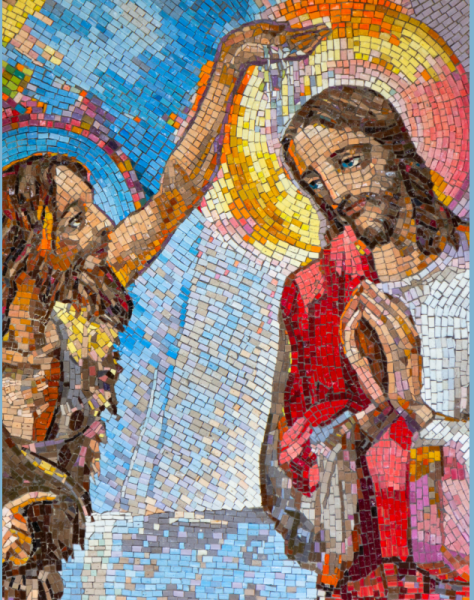
The first reading from Isaiah begins by describing the servant “with whom I am well pleased” (Isaiah 42:1). These are the words of the voice from the heavens that was heard at Jesus’ baptism. Isaiah gives us more hints about who Jesus is.
The verses that say that he will not break the bruised reed or quench the smoldering wick (Isaiah 42:3) are descriptive of Jesus’ mercy toward sinners. The reed and the wick were disposed of because they were useless. But God, out of love for us, is always ready to forgive sinners and give them another chance. God sent Jesus to forgive sinners, not reject them. We can ask God to help us see our sinfulness and bring it to God for healing.
Isaiah also says that the servant is a “covenant of the people.” A covenant was an agreement between unequal partners, in which the stronger one agrees to protect or defend the weaker one. God is offering a new covenant through Jesus, not just for the Jews, but for all peoples. In this covenant, God has forgiven our sins before we were even born, much less committed any sins. But we still have to live that covenant, by loving God and our neighbor. When we forgive each other, we are setting free prisoners of sin. When people see God’s love acted out in our lives, we are a light to the world. As we learn to do these things, we will find that God is well pleased with us.
Tom Schmidt, Diocesan Publications
The Baptism of the Lord | USCCB
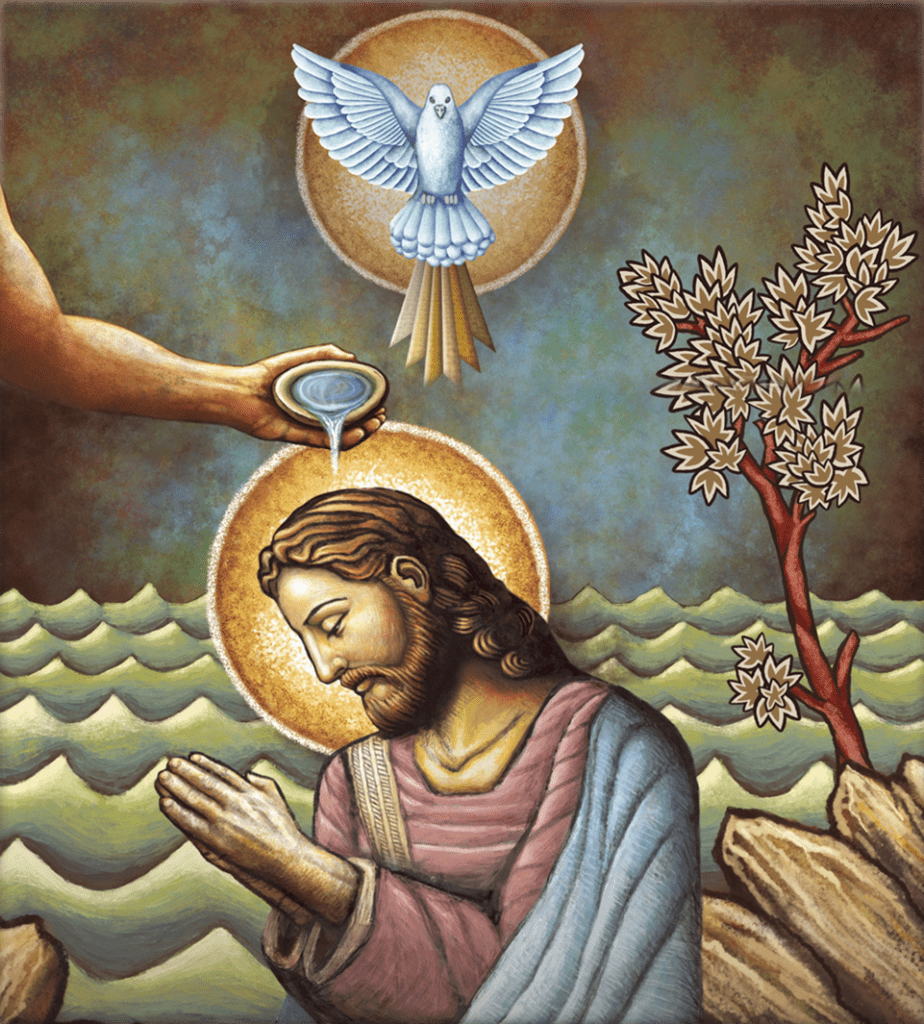
The Feast of the Baptism of the Lord concludes the liturgical Christmas Season and transitions us into the beginning of Ordinary Time. Jesus’ life is also a transitional moment from His hidden life in Nazareth to the beginning of His public ministry. Why was Jesus baptized? Jesus’ true identity was made manifest through His humble act of baptism. “You are my beloved Son; with you, I am well pleased,” spoke the voice of the Father in Heaven. The Spirit descended upon Him in the form of a dove, a public declaration of Who He is. He is the Son of God, a divine Person Who is one with the Father and the Holy Spirit, a manifestation of His identity for all to see as He prepares to begin His public ministry.
Jesus’ incredible humility is made manifest. He is the Second Person of the Most Holy Trinity, but He allows Himself to become identified with sinners. By sharing in an act that was focused upon repentance, Jesus speaks volumes through His action of baptism. From that moment onward, would be endowed with His divine presence and could be communicated to all who are baptized after Him. Therefore, sinful humanity is now able to meet divinity through baptism.
Through water that has now been sanctified by our divine Lord, we see in Jesus’ baptism a revelation of who we become in Him. Just as the Father spoke and declared Him as His Son, and just as the Holy Spirit descended upon Him, so also in our baptism we become the adopted children of the Father and are filled with the Holy Spirit. Thus, Jesus’ baptism gives clarity as to whom we become in Christian baptism.
The Baptism of the Lord | USCCB
Jesus begins His public ministry with an affirmation given to Him for us.
Jesus is the one who will baptize with fire and the Holy Spirit.
Jesus is the one who will not only save but also ignite in the world a new commitment to God’s direction for us.
We also receive fire and the Holy Spirit in our baptism. We receive the fire of faith and the guidance of the Holy Spirit.
Our commitment to our faith mission is worked out over time in the circumstances of our lives.
Do you ever think of the meaning of your personal baptism for your life?
Do you ever feel the fire or the spirit of Jesus in your life?
Readings: https://bible.usccb.org/bible/readings/010922.cfm
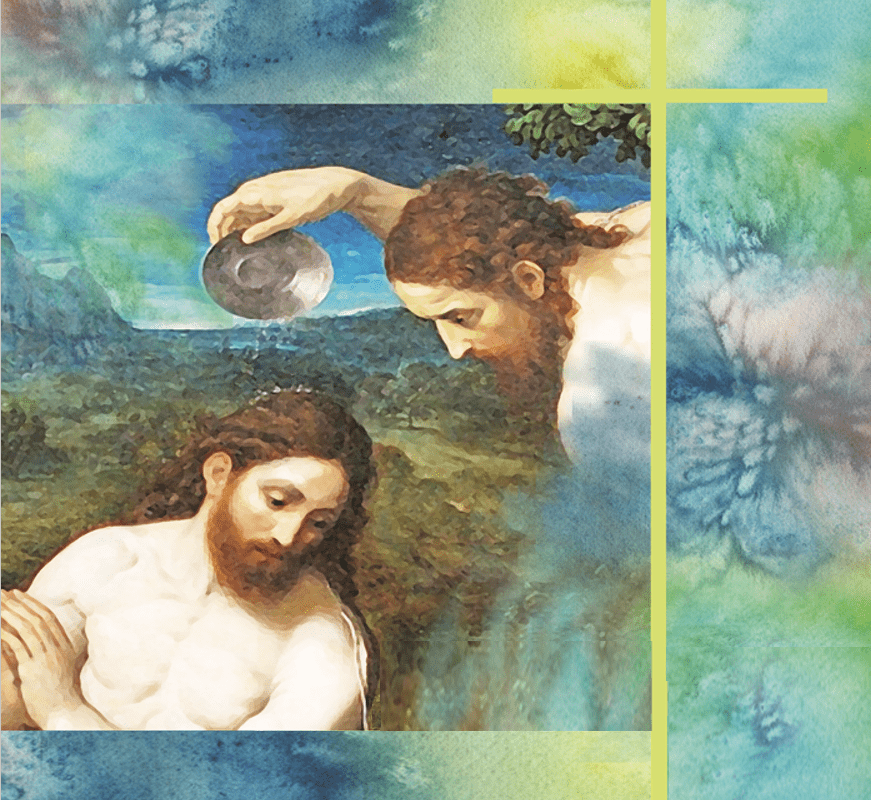
The favor of God rested upon Jesus.
His baptism was an example for all of us.
Make a tangible stand on what you are about to do.
The spirit will come and remain with you forever.
Are you prepared to begin anew?
Readings:
https://bible.usccb.org/bible/readings/011021.cfm
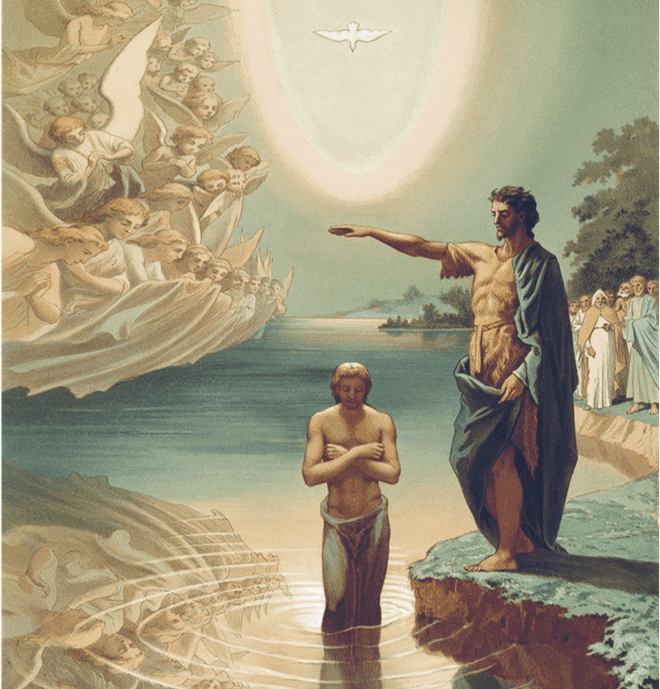
It is He who comes out of the waters of the Jordan to begin a new cycle of life for all of us.
He comes into your life out of your baptism.
It is the acceptance of Him and listening to Him that makes this new life a reality.
Have you thought about what this means to you?